
It’s late, and my wife has already turned in for the night. The amps are in the same room she’s sleeping in, so even with the DT 770 Pro, that territory is off-limits. The study room — mostly emptied out now to make way for my daughter — still holds my active guitars and the pedalboard. Her furniture will only arrive after our Switzerland trip, so until the new year, this room is still mine to make noise in… or tonight, silence. I could have brought the Yamaha THR10II or the Spark Go over and plugged in. But I didn’t. Tonight felt like an unplugged night.
The first guitar I reached for was the 2012 black AVRI — the one that spent part of her life on a Norwegian cruise ship. The scars, the wear, the story baked into the fretboard… she has character. Playing her unplugged felt good. Comfortable. The Strat body sits close, familiar, effortless to move up and down the neck. For a moment I wondered — could she replace Red as my “home” guitar?
Then my hand reminded me: I love Les Pauls, but their necks are another planet.
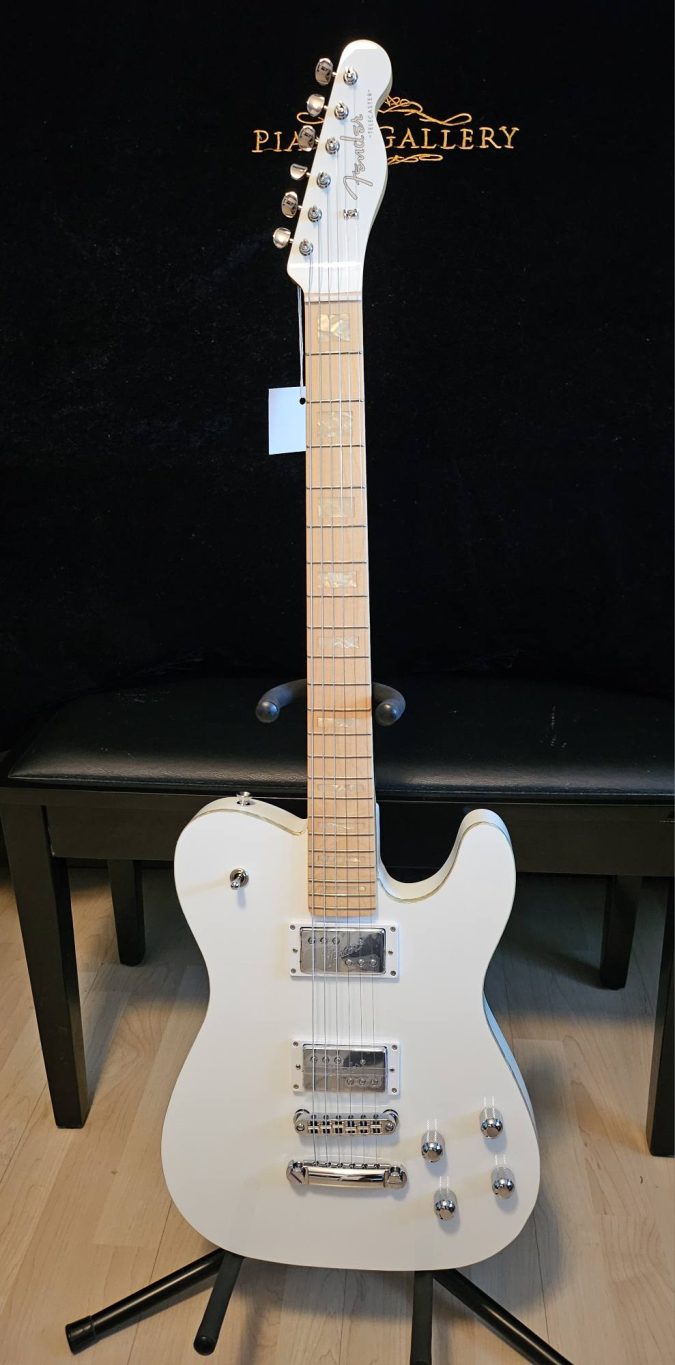
Next came Spring — my Haruna Telecaster. The difference was immediate. Her neck is slimmer, faster, almost too polite in comparison. She feels refined in a way that makes sense — she’s built for someone like Haruna. The Tele body though… no contours. None of that Strat snugness. She sits differently against the body, as all proper Teles stubbornly do. It’s tradition. A single plank with an attitude: take it or leave it.
But that short quiet session told me exactly what I needed to know.
My home guitars are still Red and Spring. The AVRI isn’t going to dethrone them. She’s not the one I reach for when I want familiarity or comfort — she’s the one I’ll reach for when I want work. The guitar that gets hauled around, used, pushed, maybe scraped a little more.
Red and Spring stay home.
The AVRI earns her role as the workhorse.
And somehow, playing unplugged — hearing only the soft mechanical sound of strings and wood, no pedals, no amps — made that perfectly clear.