
There was a point this past week when I realised I was no longer looking for just another pedal for pedal’s sake.
I was looking for the smallest version of the rig that could still make the music I actually play.
That distinction matters.
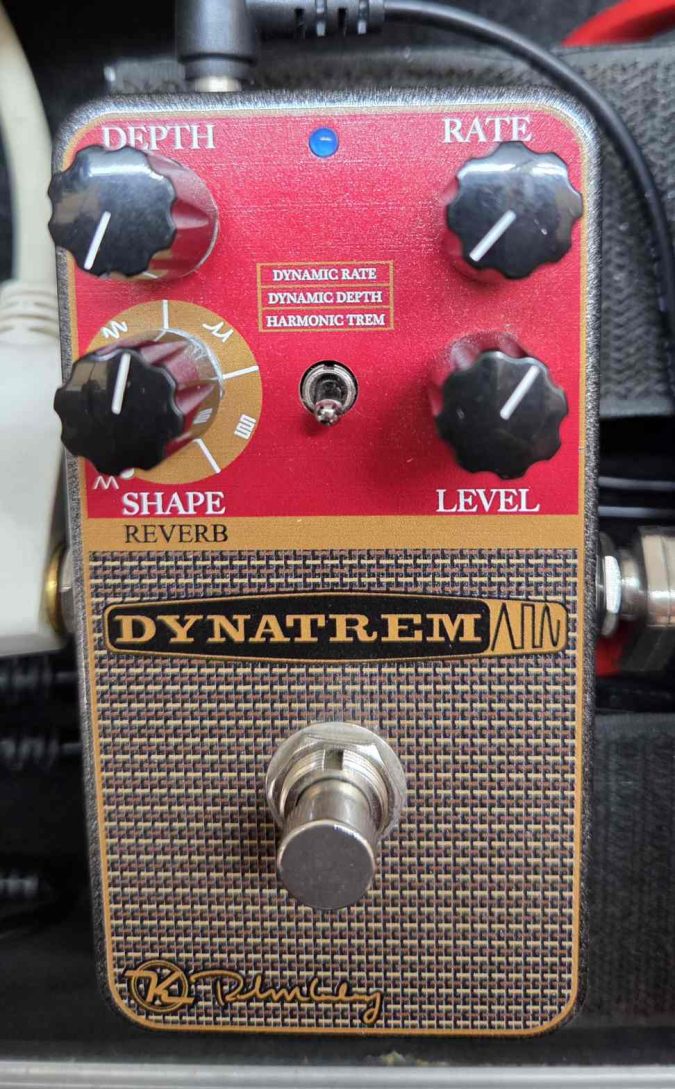
The morning started with two new arrivals from the past few days: a used Keeley DynaTrem, which I had picked up for S$100, and a Lovepedal Tchula, bought for S$150. Both had very specific questions to answer.
I started with the Fender Pro Junior, then moved everything over to the VHT Special 6. I wanted to hear the pedals in both environments before making any decisions.
DynaTrem: the S$100 surprise
The DynaTrem was the easier decision.
She did exactly what I had hoped she would do, and then a little more.
Her tremolo sounds good. Her reverb sounds good. More importantly for my purposes, the shorter end of the reverb can work surprisingly well as the kind of short ambience or slapback effect I normally use.
That alone would have justified her place.
But I discovered two other useful things.
First, the DynaTrem has integrated noise reduction designed to reduce the noise swells associated with tremolo circuits. With the noisy gain pedals in the chain, that became unexpectedly useful.
Second, her level control is not merely there to compensate for volume. It can function as a clean boost.
That means I can switch off the gain section entirely, turn on the DynaTrem with a little reverb or tremolo, raise the level, and play clean.
So the pedal I bought primarily to consolidate tremolo + reverb turned out to offer:
tremolo + reverb + short ambience + noise management + clean boost.
For S$100, that was a very pleasant surprise.
DynaTrem stays.
Then came the Tchula
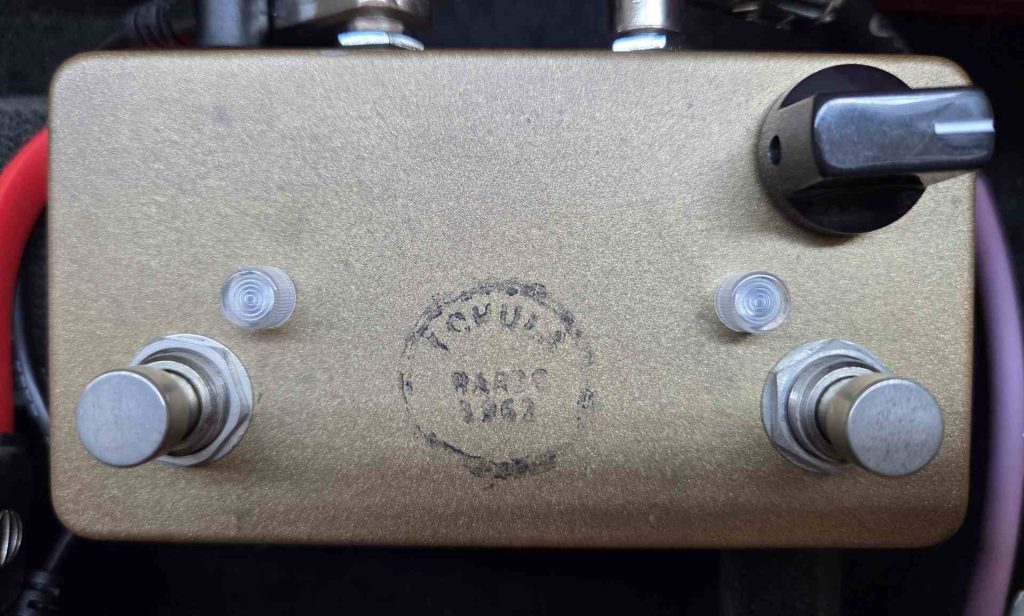
The Tchula was the more serious experiment.
I had been fascinated by the idea that one knob could potentially replace three other one-knob pedals: my Analog.Man Beano Boost, Greer Special Request, and Acapulco Gold.
The attraction wasn’t simply fewer pedals.
It was the Lovepedal philosophy behind the Tchula: let the guitar and amplifier do more of the work.
I wanted to know whether one box could give me enough of the territory I actually use:
boost → edge of breakup → overdrive → hairy gain.
The answer was yes.
The Tchula has plenty of dirt and grit to satisfy me. She can cover the boost and overdrive territory very convincingly.
But she cannot do fuzz.
And I like fuzz.
That single observation changed the whole experiment.
The AG stays
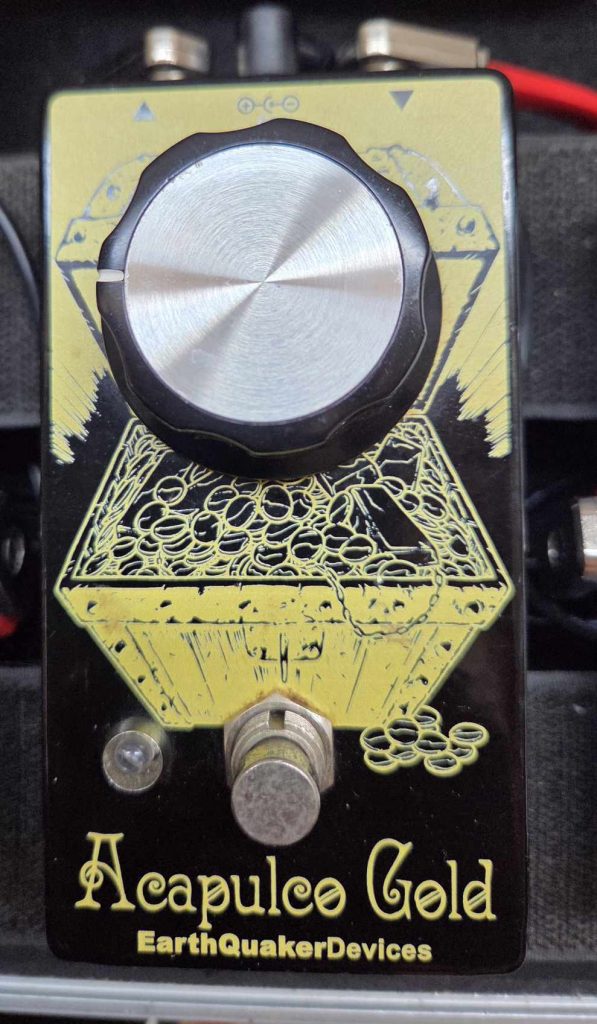
I brought the Acapulco Gold into the chain.
Immediately, the fuzz was there.
The AG is one of those pedals that does an enormous amount with one knob. She can be thick and woolly without becoming the completely wild fuzz monster that some of my other pedals can become.
She is also noisy.
Very noisy, in fact.
But the interesting thing is that the noise doesn’t make her unusable. The other pedals and Lady’s controls can tame the character, and I can accept some noise in exchange for the particular fuzz voice she gives me.
More importantly, she only cost me S$65, thanks to the Secret Path trade.
For that money, with that sound and one knob, she has earned her place.
The Special Request earns her keep
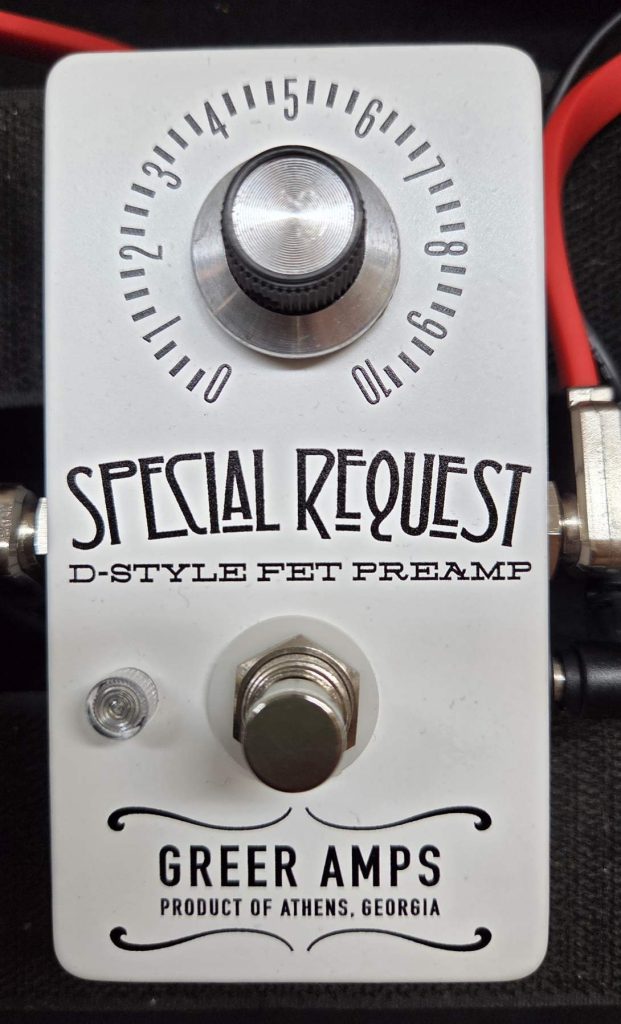
The Special Request was another easy decision after this morning.
Her primary job remains simple: boost.
She does it well.
But I have now discovered a second job that is almost as useful: she can reduce the noise of the AG.
Not eliminate it.
Reduce it.
And that is enough.
This morning, when the AG was running with another gain stage in front of her, I could hear the noise. The Special Request could bring it down considerably.
That makes her more than just another boost.
She becomes part of the way I manage the AG.
One knob. Two useful jobs.
She stays.
Beano versus Tchula
And then there was the uncomfortable part.
The original Dorcas began with the Beano.
The Analog.Man Beano Boost has already proven herself to me. I like her. She has a distinctive Rangemaster voice, she interacts beautifully with Lady, and I am still new enough to her that I haven’t exhausted what she can do.
But when Beano and AG are together, there is audible noise.
The same thing happened when I put Tchula and AG together.
Tchula plus AG produces noise too.
So the noise didn’t decide the contest.
Both combinations have it. Both can be managed to some degree with the other controls.
The real question became:
Which pedal gives me more useful gain territory for one position on Dorcas?
And there was the answer.
The Tchula can give me the boost and overdrive territory I need. The AG gives me the fuzz that Tchula cannot provide.
That makes the pair surprisingly comprehensive.
The Beano remains a very good pedal.
She simply doesn’t need to occupy permanent Dorcas real estate.
The final four
By the end of the morning, Dorcas had become:
Tchula → Special Request → AG → DynaTrem
Four pedals.
Seven knobs in total.
The first three pedals have only one knob each. DynaTrem has four, but she earns those controls by handling multiple jobs.
And the more I think about it, the more coherent the arrangement feels.
Tchula gives me boost, overdrive and grit.
Special Request gives me another simple boost and helps tame the AG.
AG gives me the fuzz I refuse to live without.
DynaTrem gives me tremolo, reverb, short ambience, noise management and a clean boost.
That is a remarkably small vocabulary.
And it is enough.
Beano hasn’t gone anywhere
The Beano is moving out of Dorcas, but she isn’t being sold.
Not yet.
She now has her own little laboratory.
With the Pro Junior:
Lady → Beano → Triple Threat → Pro Junior
With the Special 6:
Lady → Beano → Mimic Mock I → Special 6
That gives me the chance to spend time with Beano on her own terms, without Tchula, Special Request or AG influencing the experiment.
I am still very much interested in her.
She was important enough to start this whole chapter, and she remains an excellent pedal.
She has simply become a guest.
Less is more, again
There is something amusing about where this has ended.
A few weeks ago, I was still thinking about pedals in terms of what else I could add.
Now I’m thinking about what I can remove.
The guitar consolidation came first. The pedal consolidation followed naturally.
Some very good gear is now on the selling list. Not because those pieces are bad, but because I have become much clearer about what I actually use and what I actually want to hear.
That old phrase from my first band’s drummer keeps coming back:
Less is more.
I think I finally understand why it has stayed with me.
It doesn’t necessarily mean owning less.
It means making sure that what remains has a reason to be there.
And this morning, Dorcas found her reason.
Tchula. Special Request. AG. DynaTrem.
Four pedals.
Seven knobs.
Enough dirt.
Enough fuzz.
Enough ambience.
Enough room to play.