
The Story
Every gear journey reflects time, perspective and changing seasons.
Mine began in 1991, when I first picked up the guitar. In 2020, the pandemic unexpectedly led me to start a small guitar business, opening another chapter in a journey that has continued to evolve.
Through every high, low and transition, I thank God for faithfully carrying me through it all.
Today, music is something I enjoy quietly and without much pressure. I am an “okay guitarist” at best, and most of my playing happens at home, doodling with guitars, basses and whatever else happens to inspire me.
I know what I like, though:
Raw. Uncompressed. Touch-sensitive. Somewhere between clean and natural breakup, with a little organic wobble and as little processing as possible.
My playing world and listening world are rather different. I grew up with the synth-pop of Modern Talking, while today I listen widely across K-pop, J-pop, rock, indie, trip-hop, cinematic music, Mandopop and acoustic singer-songwriters. SCANDAL, aespa, Davichi, ITZY, NMIXX, BABYMONSTER, Yerin Baek and Younha are among the artists that regularly find their way into my listening.
The music changes.
The guitars remain.
The Instruments
Every instrument here has a reason for being here. Some are tools. Some are companions. A few have become part of the family story.
The Legacy Guitars
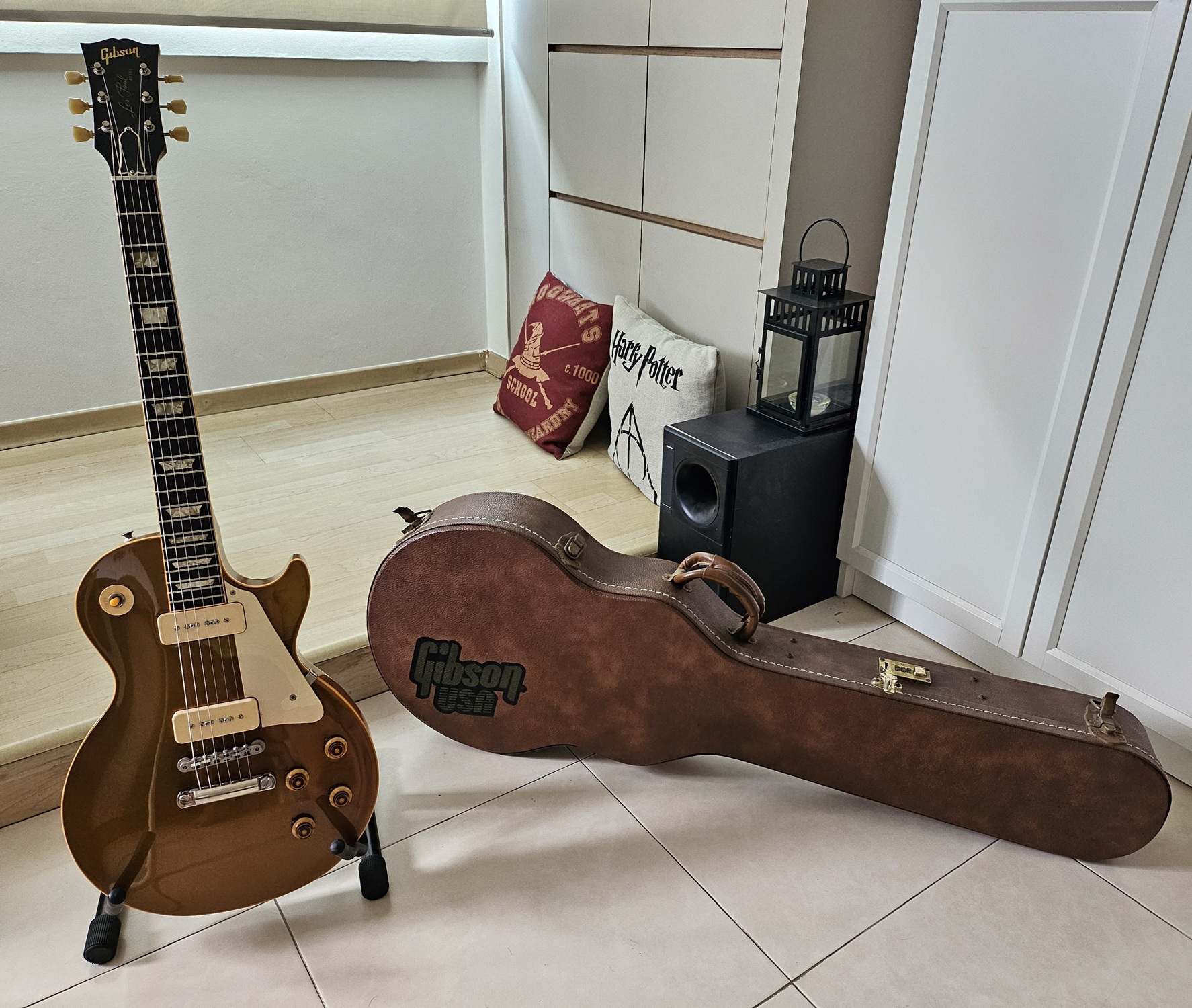
Regent
1996 Gibson Custom Shop Historic Collection ’56 Les Paul Goldtop R6
My dream guitar. Her pair of P90s deliver exactly the raw, growling and dynamic voice I love.
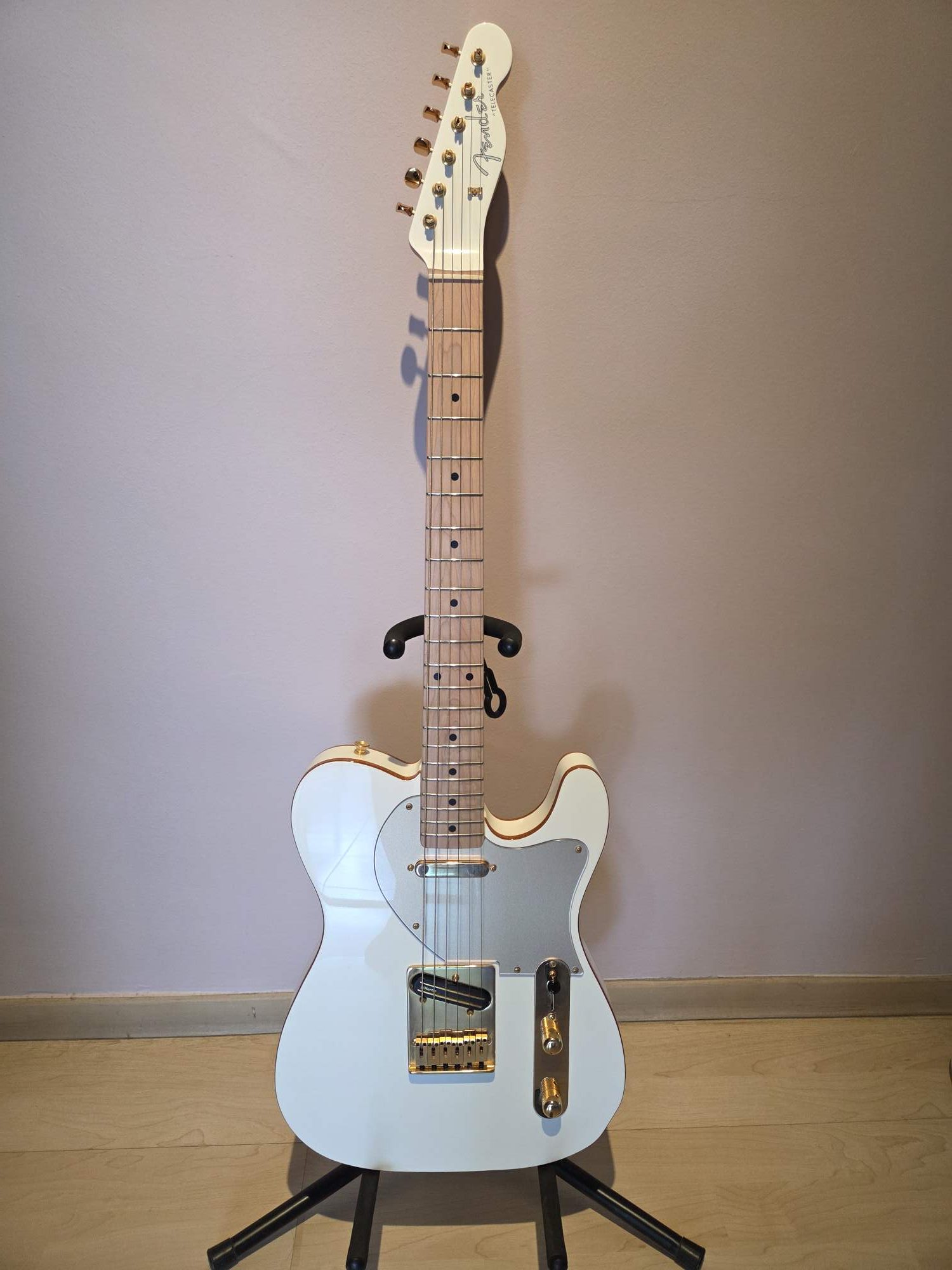
Lady
2017 Fender Haruna Telecaster
My trusted HOME guitar, connected to my admiration for SCANDAL and Haruna.
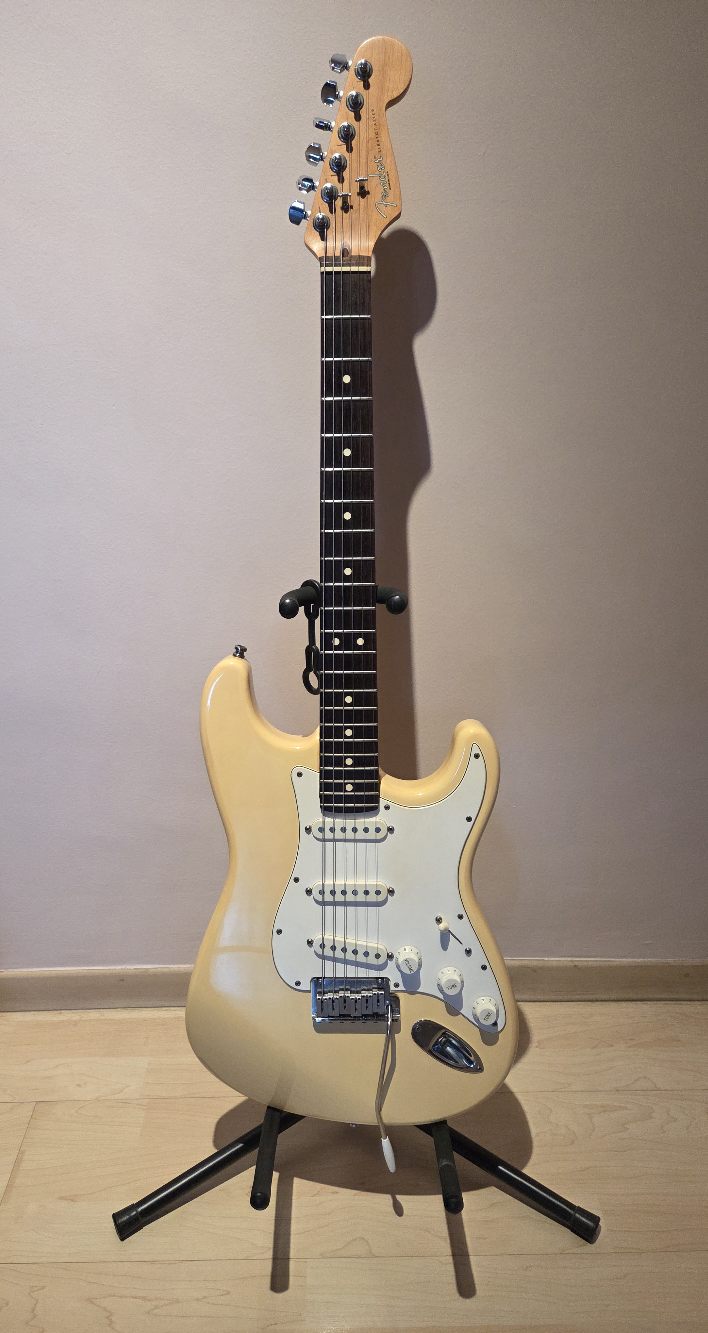
Joy
1996 Fender American Standard Stratocaster
The Strat that finally sounds, feels and looks like the Strat I had been searching for. Named after my younger daughter.
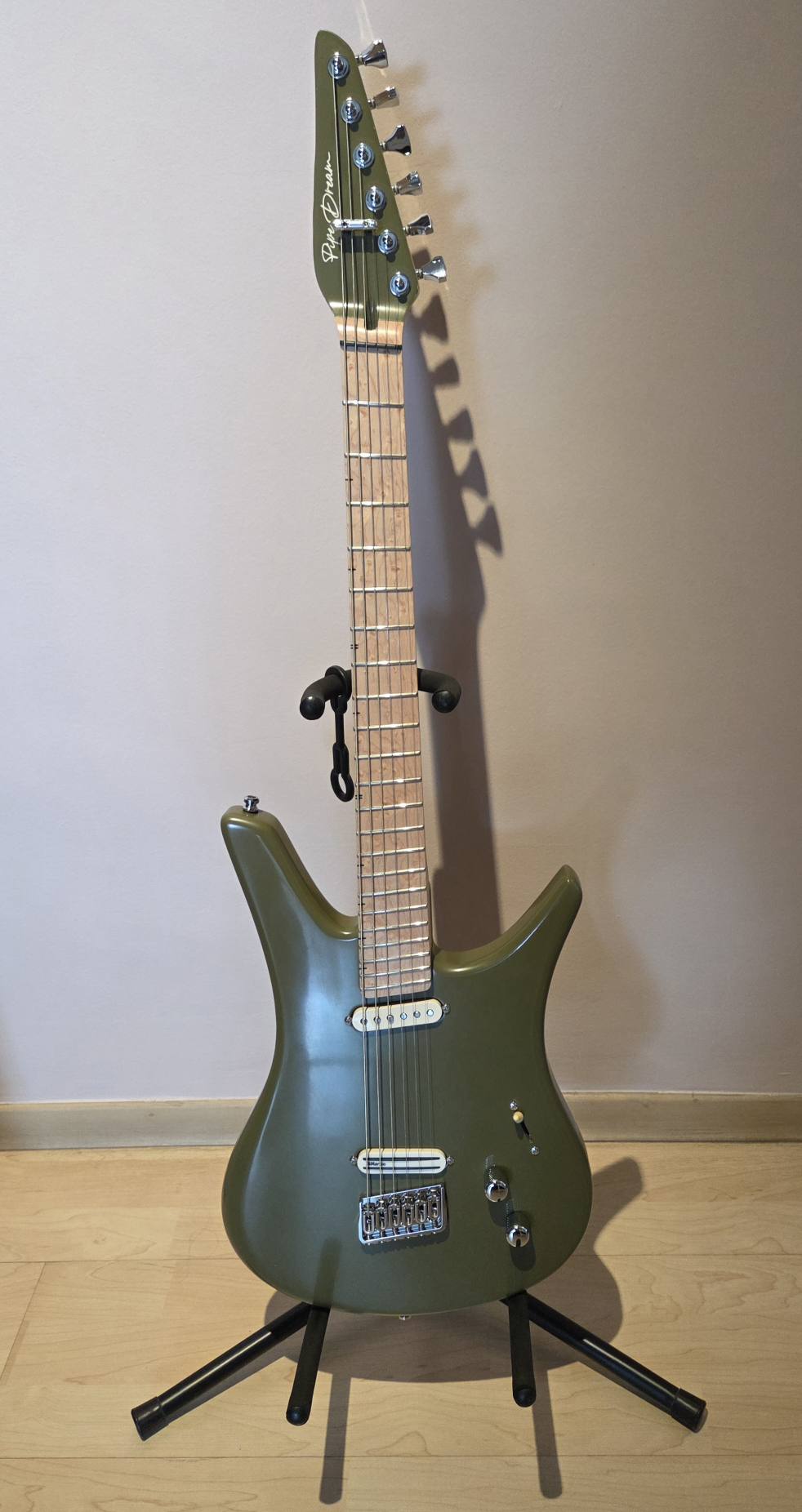
Faith
2026 Pipe Dream Fretworks Model S6 Multi-scale
My first custom-ordered boutique workhorse, built by Rob Page at Pipe Dream Fretworks. Her Russian Green finish was chosen by my older daughter, Faith.
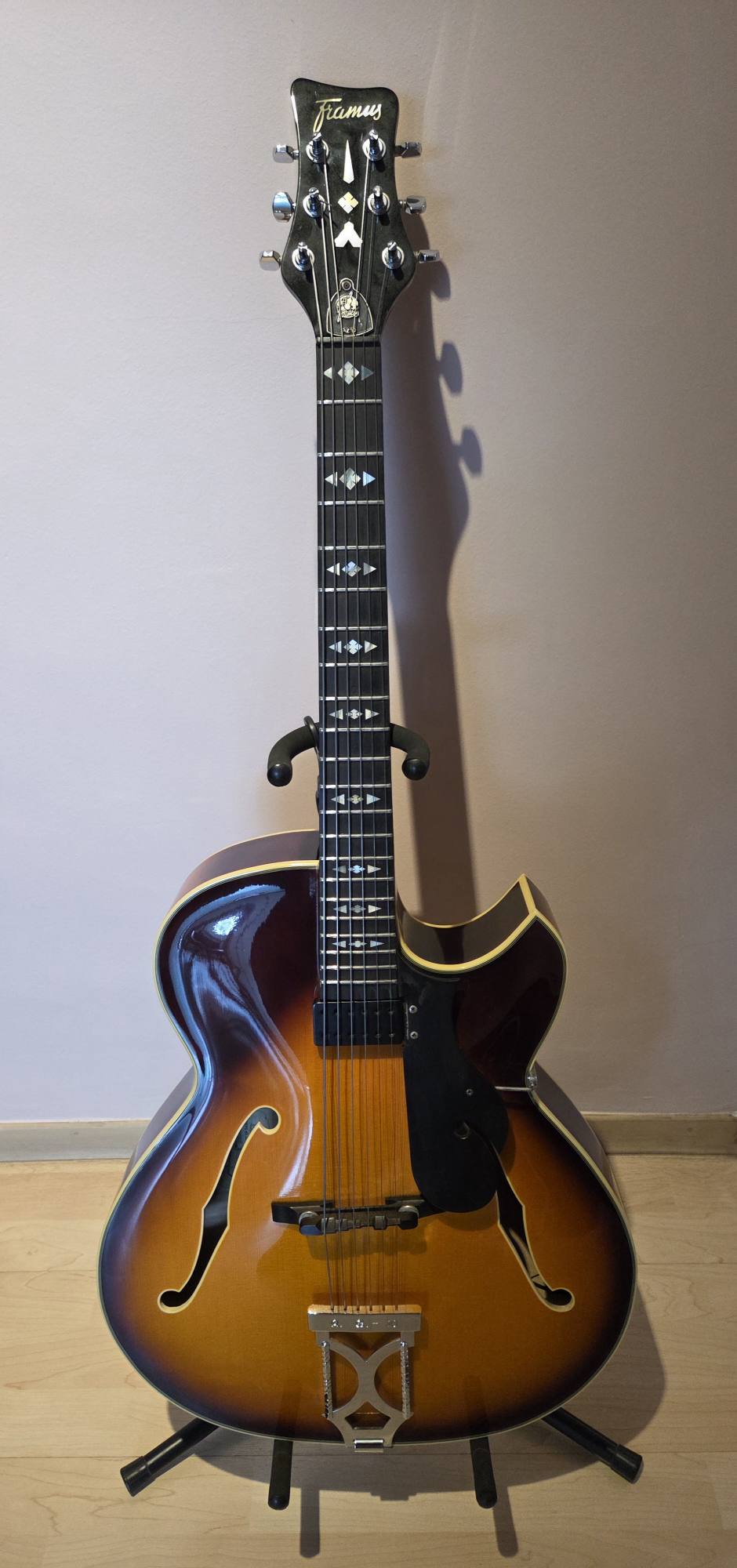
Alma
2009 Framus AZ-10 Custom
My first hollowbody that I genuinely enjoy playing. The Warwick connection makes her story even sweeter.
These guitars are more than instruments. They are pieces of a story I hope will outlive my own playing days.
Bass & Acoustic
Enza
2023 Müb Miezo 18″/5
A compact five-string powerhouse with the unmistakable “Maurizio factor.” She makes bass exploration surprisingly effortless.
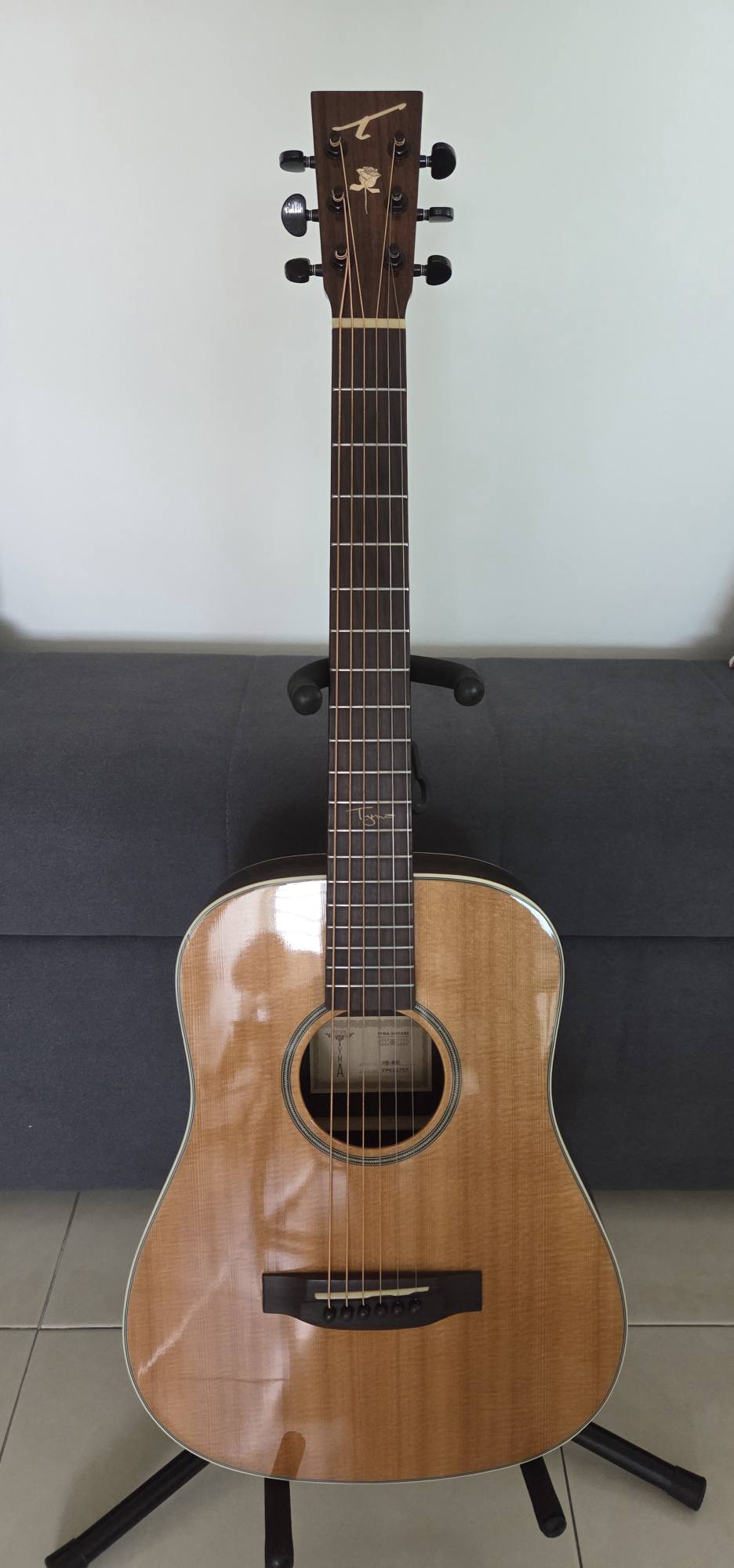
May
TYMA HB-400
I began as an acoustic guitarist, so an acoustic will always have a place here. After many guitars have come and gone, May remains.
The Spark
Woody
unknown toy 37-key piano
A small, playful reminder that making music does not always need to be complicated.

The Home Stations
My home playing revolves around a few simple destinations.
Bedroom — Simple & Honest
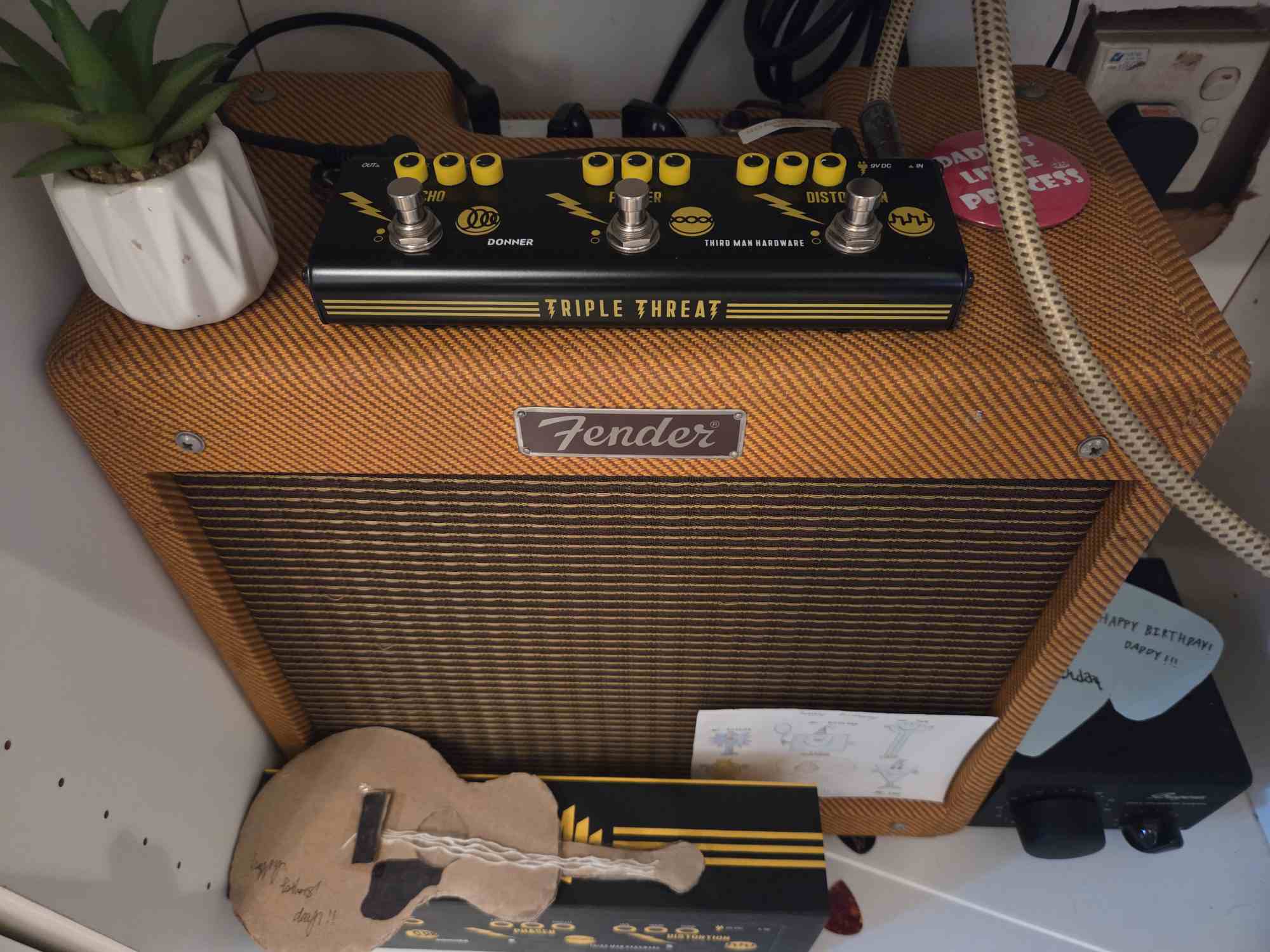
The Fender Pro Junior IV remains exactly where she belongs.
Paired with the Third Man Hardware Triple Threat and Bugera PS1 Power Soak, this is the most immediate setup in the house.
Guitar → Triple Threat → Pro Junior
Small, direct and familiar.
Balcony — Versatile & Relaxed
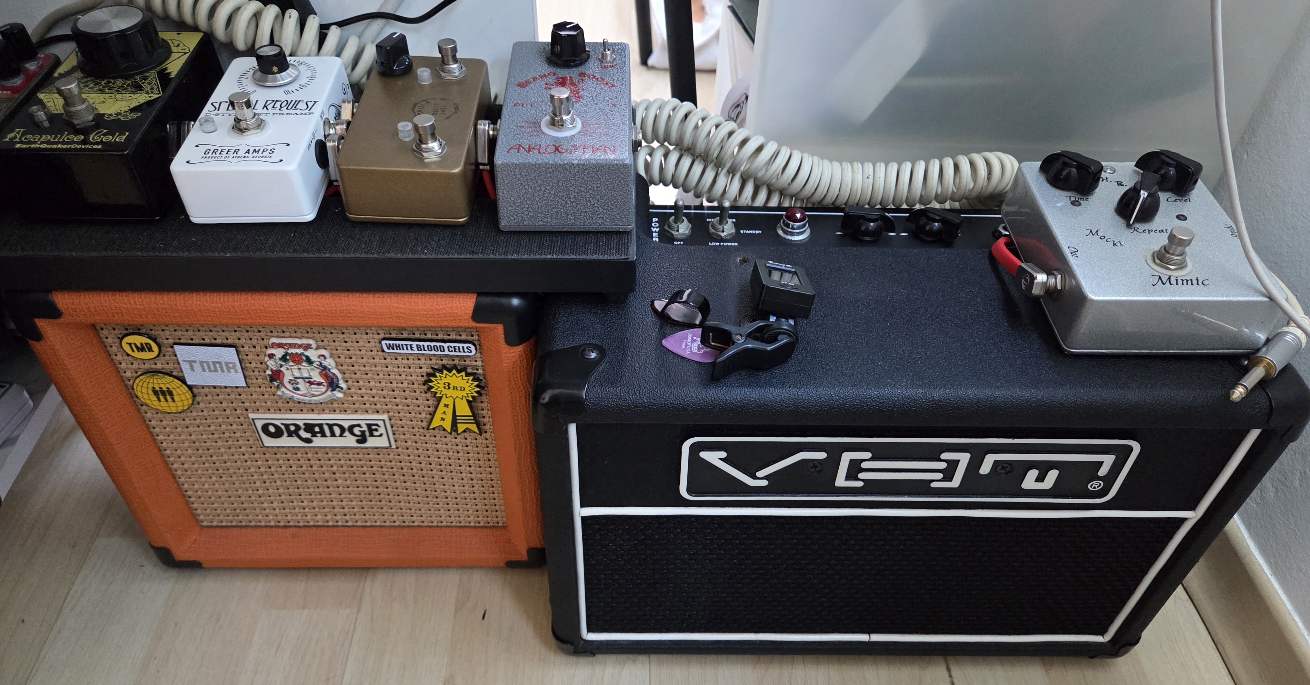
The VHT Special 6 and Orange PPC108 have taken over the role previously held by the Laney Cub 8.
The amp-side companion is the H.B.E. Mimic Mock I, giving the setup its own atmospheric character.
Guitar → Mimic Mock I → Special 6 + PPC108
The bass station remains deliberately simple:
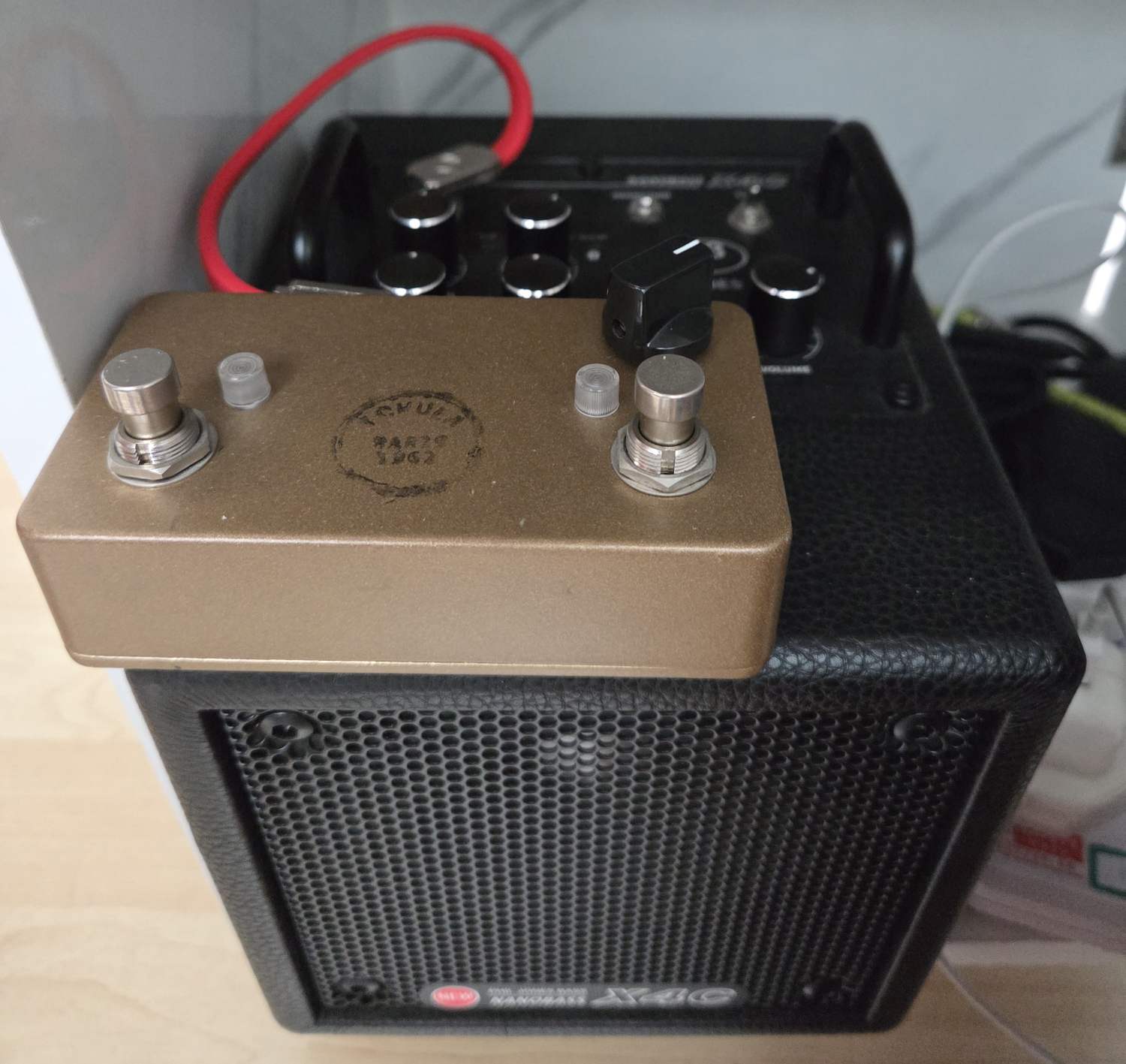
Bass → Lovepedal The Tchula → Phil Jones Bass X4C Nanobass
Enough for bass without turning the guitar system into something it doesn’t need to be.
Dorcas
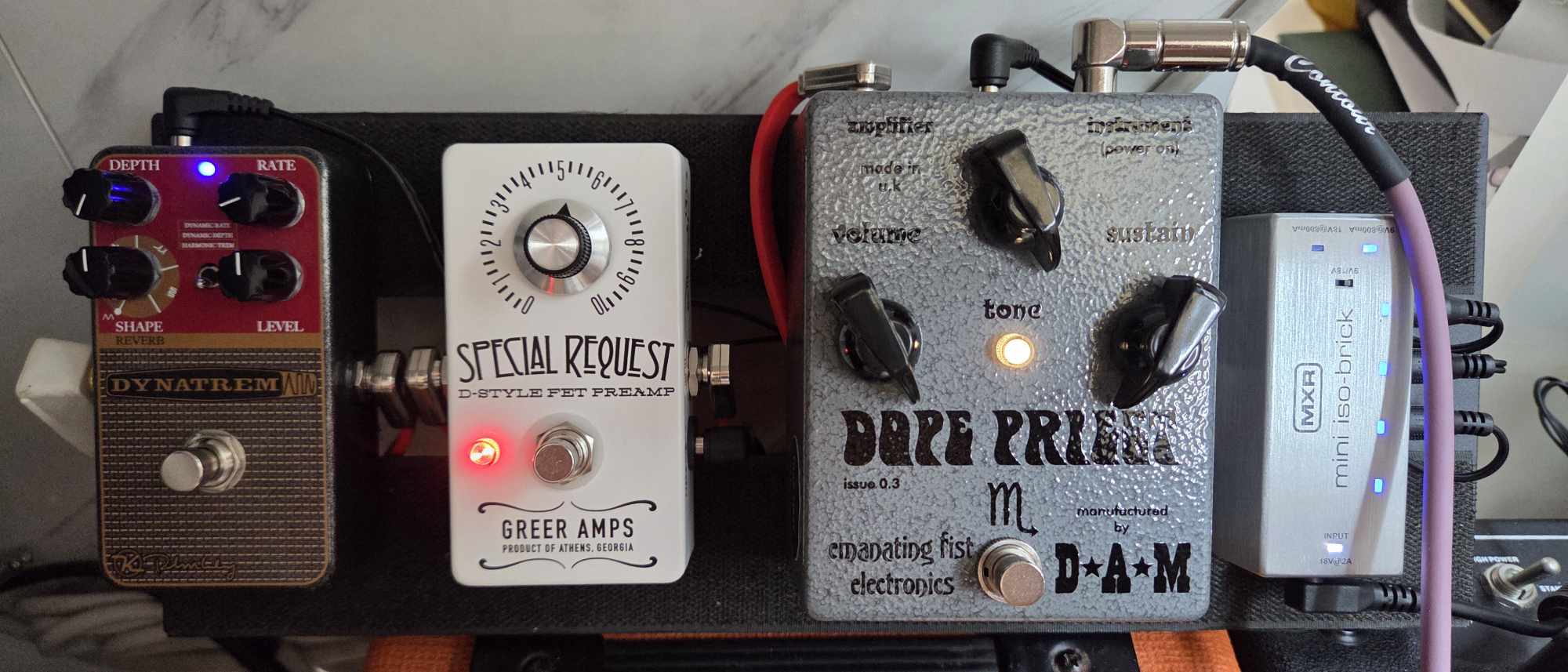
At the centre of everything is Dorcas, my portable mostly analogue tone station. Dynamic, Omni-platform, Resourceful, Chameleon, Agile, Self-contained.
She has become deliberately simple:
D*A*M Emanating Fist Electronics DP-70 → Greer Amps Special Request → Keeley Electronics Dynatrem Dynamic Tremolo
3 pedals. One single file. All run power from the MXR Mini ISO-Brick.
The Triad
D*A*M Emanating Fist Electronics DP-70
The raw, touch-sensitive voice that takes me from edge-of-breakup grit all the way to glorious fuzz.
Greer Amps Special Request
A one-knob quiet, precise sculptor that shapes the dirt when called upon.
Keeley Electronics Dynatrem Dynamic Tremolo
The multifunctional ambience section: tremolo, reverb, short ambience and boost in one pedal.
With the DP-70 completing the three-pedal chain, I don’t think Dorcas can get any leaner without losing something.
DP-70 → Special Request → DynaTrem
Each pedal has a defined role, and none is there merely for the sake of another flavour.
From this point forward, replacing any of the three requires more than finding an interesting alternative. A new pedal would have to perform that particular role better than the incumbent.
That is a considerably higher bar.
Dorcas is no longer a collection of pedals looking for jobs.
She has three jobs, and three pedals doing them.
The Second Path
A hypothetical second signal chain: one guitar, one solo drive pedal, the VHT Special 6 + PPC108, and the amp-side Mimic Mock I.
The Orange Distortion has made the hypothesis non-hypothetical. At just S$70, with two knobs and enough range to take the Special 6 from edge of breakup through overdrive, she does exactly what this path needs.
Guitar → Orange Distortion → Mimic Mock I → Special 6 + PPC108
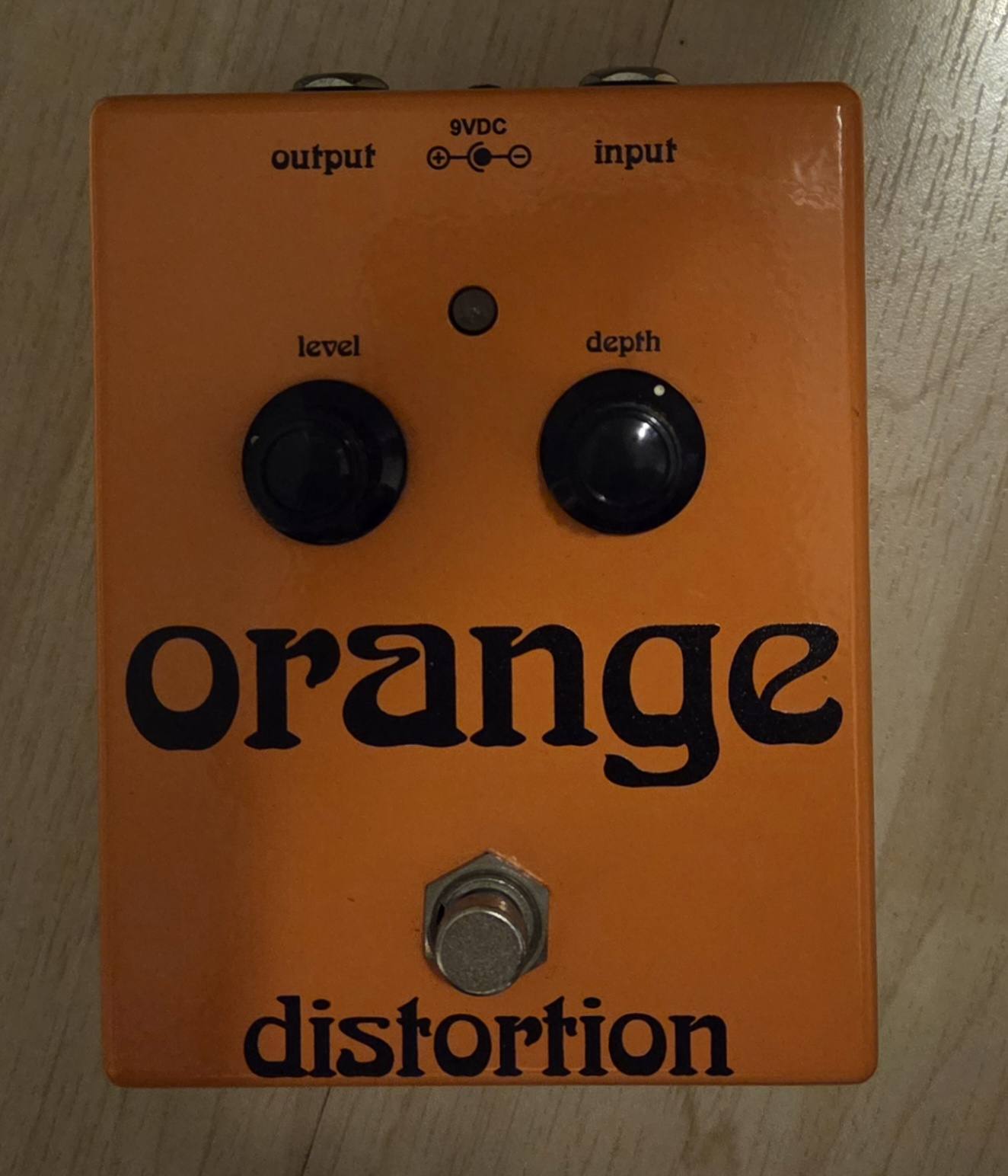
One slot. One pedal. Orange rules the lane.
The Mobile Digital Hub
The digital side of the rig lives separately from Dorcas.
The Mobile Digital Hub travels between the different stations when a session calls for something beyond the analogue chain.
It contains:
- Valeton GP-5 Multi-Effects
- TC Electronic Infinite Sample Sustainer
Rhythm, looping, modelling, sustained textures and everything else live here.
Dorcas handles the core sound.
The Mobile Digital Hub handles the possibilities.
The Guests
Not everything needs permanent residency.
The current guest bench is small:
- Electro-Harmonix Green Russian Big Muff Pi (too green and cool to leave)
- VOX Cooltron Bulldog Distortion (too unnecessarily big with a tube to leave)
- Analog Man Beano Boost Rangemaster (a legend in the field)
- EarthQuaker Devices Acapulco Gold (the one huge knob and fuzz)
Special Feature:
Dope Priest DP-70 — The Unlikely Centre of Gravity
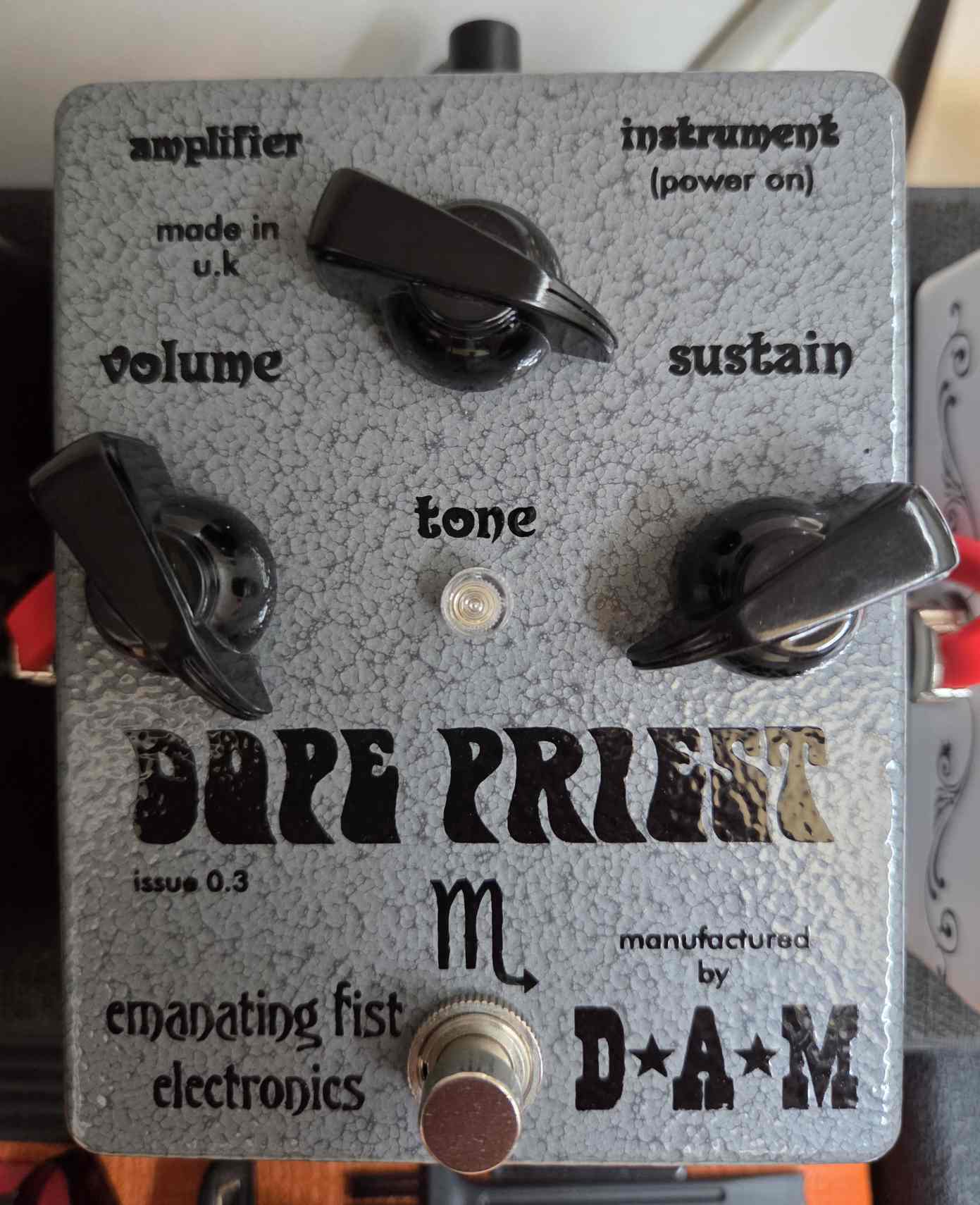
The D*A*M Emanating Fist Electronics Dope Priest DP-70 arrived in September 2026 and, within 24 hours, completely rearranged Dorcas.
That was not the plan.
The DP-70 is a highly limited David Main fuzz inspired by the earliest Big Muff lineage. Stefan Karlsson’s excellent Guitar Pedal X history traces its rather twisted ancestry through the Mosrite Fuzzrite, Guild Foxey Lady, Mike Matthews’ early Axis Fuzz and, eventually, the first Electro-Harmonix Big Muff Pi. The DP-70 represents the early, primitive high-gain side of that lineage, using BC549C transistors.
On paper, this is not an obvious match for my playing.
My music is raw, uncompressed and touch-sensitive, somewhere between clean and natural breakup, with a little organic wobble and as little processing as possible. A primitive high-gain Big Muff-derived fuzz should, theoretically, live rather further down the road.
Instead, the DP-70 immediately made itself at home.
Within a day, it had displaced three pedals that had previously earned their places in my collection: the Analog Man Beano Boost, Lovepedal The Tchula, and EarthQuaker Devices Acapulco Gold.
All three are now KIV.
That is not because they suddenly became bad pedals. Quite the opposite. They are all excellent examples of the one-knob philosophy I enjoy so much. But the DP-70 gave me something I had not expected from this kind of fuzz: a remarkably convincing space between clean, breakup and fuzz.
It does not merely sound good when it is being pushed hard.
It sounds good when it is being played lightly.
That distinction matters.
With the guitar volume backed off and the DP-70 set below its more aggressive territory, it can respond to the hands in a way that feels much closer to an extension of the guitar than a layer being placed on top of it. Dig in and the texture grows. Ease off and it retreats. Pick lightly and the note can remain surprisingly open.
Then, when asked to do what it was originally built to do, it stops pretending to be polite and becomes a glorious, raw fuzz.
That combination is what won me over.
The result is the simplest Dorcas I have had so far:
DP-70 → Special Request → DynaTrem
Three pedals.
The DP-70 starts the voice.
The Special Request shapes the voice when necessary.
The DynaTrem supplies the movement and ambience.
Nothing is there merely because I might someday need it.
And that may be the most interesting thing the DP-70 has done to my rig: it didn’t add another sound. It removed three reasons to need other sounds.
For now, Dorcas is finished.
And the DP-70 sits right in the middle of her.