
Most guitarists spend years searching for better tone.
They buy more pedals, upgrade guitars, stack options on top of options—only to realise something still isn’t quite right. The sound may be bigger, but it’s not clearer. More complex, but not more musical.
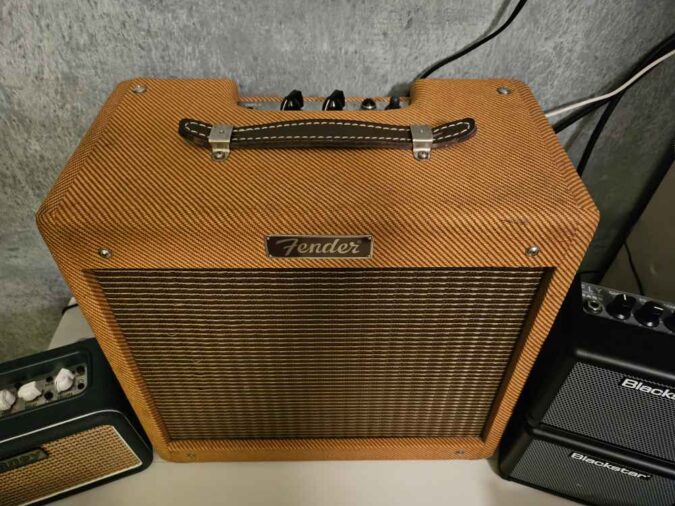
Then there’s the Fender Pro Junior IV.
At first glance, it doesn’t make a strong case for itself. No EQ. No multiple channels. No built-in effects. Just a volume knob, a tone knob, and not much else.
And that’s exactly the point.
The Pro Junior doesn’t give you more. It takes away what you don’t need.
Plug into it, and something interesting happens. You start to hear your playing more clearly—sometimes uncomfortably so. Your pick attack matters. Your phrasing matters. The difference between guitars becomes obvious. There’s nowhere to hide behind layers of processing or tone shaping.
It’s not an amp that flatters you. It’s an amp that tells the truth.
But in doing so, it becomes something far more valuable than a typical “feature-rich” amp. It becomes an instrument in its own right.
Turn the volume up, and it breathes. Roll your guitar volume back, and it cleans up. Dig in harder, and it responds. Back off, and it softens. It doesn’t just amplify your signal—it reacts to you.
That responsiveness changes how you play.
Instead of reaching for another pedal, you adjust your hands. Instead of adding more gain, you refine your attack. Instead of chasing tone, you start shaping it in real time.
And slowly, your sound becomes clearer—not because it’s bigger, but because it’s more controlled.
Of course, the Pro Junior isn’t perfect.
It has limited headroom. The low end can get loose if you push it too far. There’s no safety net of EQ to fix things quickly. If your tone is muddy, it stays muddy until you do something about it.
But those “limitations” are exactly why it works.
They force you to play better. To listen more closely. To strip things down to what actually matters.
In a world where gear often promises more, the Pro Junior offers less—and in doing so, gives you something far more useful: clarity, response, and honesty.
It won’t impress you in a showroom.
But it might change the way you play.