
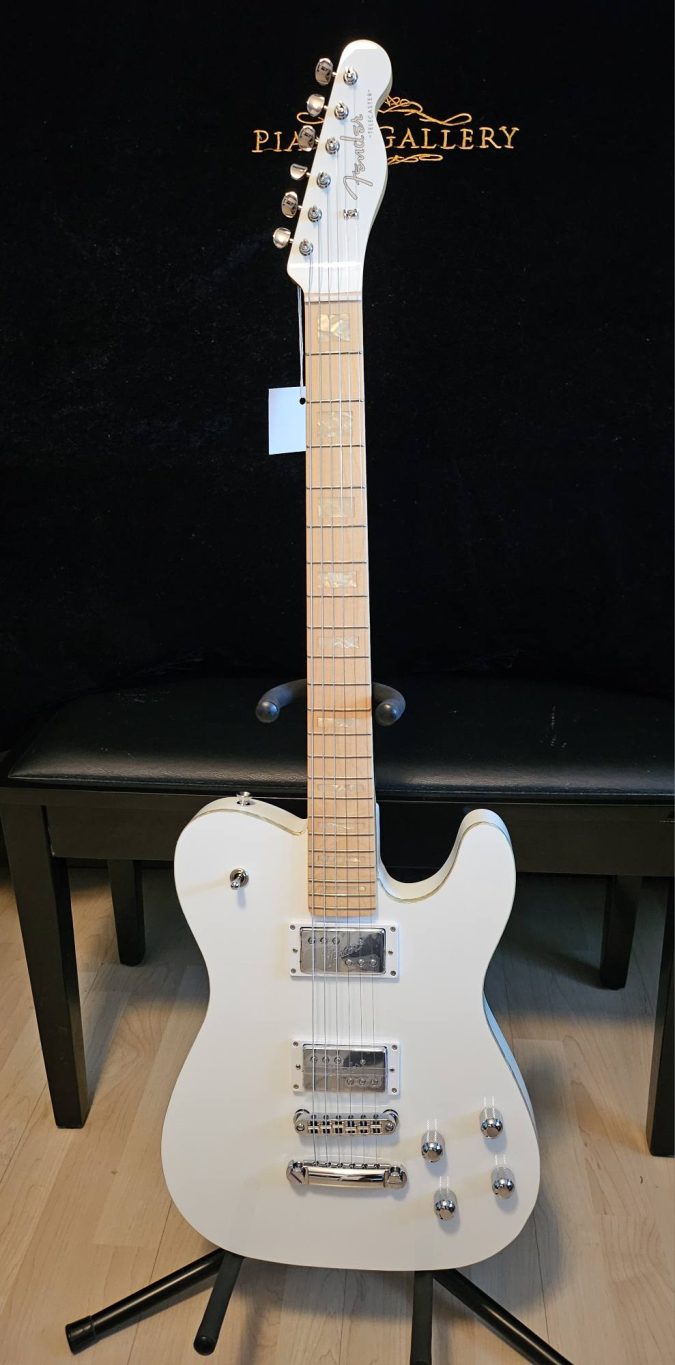
8 plus in the evening.
Living room.
Workstation.
Same signal chain sitting neatly in the Joyo case. No changes, no chasing—just picking up where the afternoon left off.
This time, it was Spring.
Muff Alone — The First Voice
Straight into the Phil Jones Bass X4C Nanobass.
Muff on. Nothing else.
Neck pickup.
Thick.
Muddy.
Fuzzy.
And I liked it.
There’s something about that kind of tone—unrefined, almost excessive—that feels honest. Not polished, not “correct,” just present. The kind of sound that fills space without asking permission.
Bringing in Control — Team Medic
Then the ThorpyFX Team Medic came in.
And everything shifted.
- Treble up → clarity
- Mids available → definition if needed
The same fuzz, now shaped. Not reduced—guided.
What stood out most:
«the Muff actually responded to my attack»
That matters.
Because earlier, I had questioned whether it felt too compressed, too “artificial.” But here, with Spring and the right support, it breathed.
The Setting That Worked
This wasn’t guesswork anymore. It landed somewhere specific:
Muff
- Volume: ~10 o’clock
- Sustain: ~3 o’clock
- Tone: ~3 o’clock
Team Medic (Boost mode)
- Gain: ~noon
- Volume: ~3 o’clock
- Treble: ~3 o’clock
- Mids: ~9 o’clock
- Bass: ~9 o’clock
That balance did something important:
- kept the thickness
- removed the blanket
- allowed the guitar to speak clearly
Spring held it all together with authority.
The Unexpected Lesson — Headphones
Then came the Beyerdynamic DT 770 Pro.
And everything changed again.
The same tone that felt rich through the room suddenly became:
- too thick
- too compressed
- almost overbearing
That was the real takeaway of the night.
Not about pedals. Not about guitars.
About listening context.
What the Headphones Revealed
The DT 770 Pro didn’t lie.
It removed:
- air
- room interaction
- natural diffusion
What remained was the raw density of the fuzz.
And without space, that density stacked up fast.
The Realisation
Headphones are not neutral ground for this kind of playing.
They are:
- detailed
- direct
- unforgiving with thick tones
Which leads to a simple truth:
«Headphones are not for performance-style rock sessions at speed.»
They’re for:
- slower playing
- exploration
- inspiration
A different mindset entirely.
Closing Thought
Same guitar.
Same pedals.
Different environment.
And suddenly, a different lesson.
The Muff didn’t change.
Spring didn’t change.
But the way I heard them did.
One Line to Carry
«Tone isn’t just what you play—it’s where and how you listen.»